Terra Australis Ignota is a multimedia project that delves into the generation of affective virtual environments through the use of speech emotion recognition.
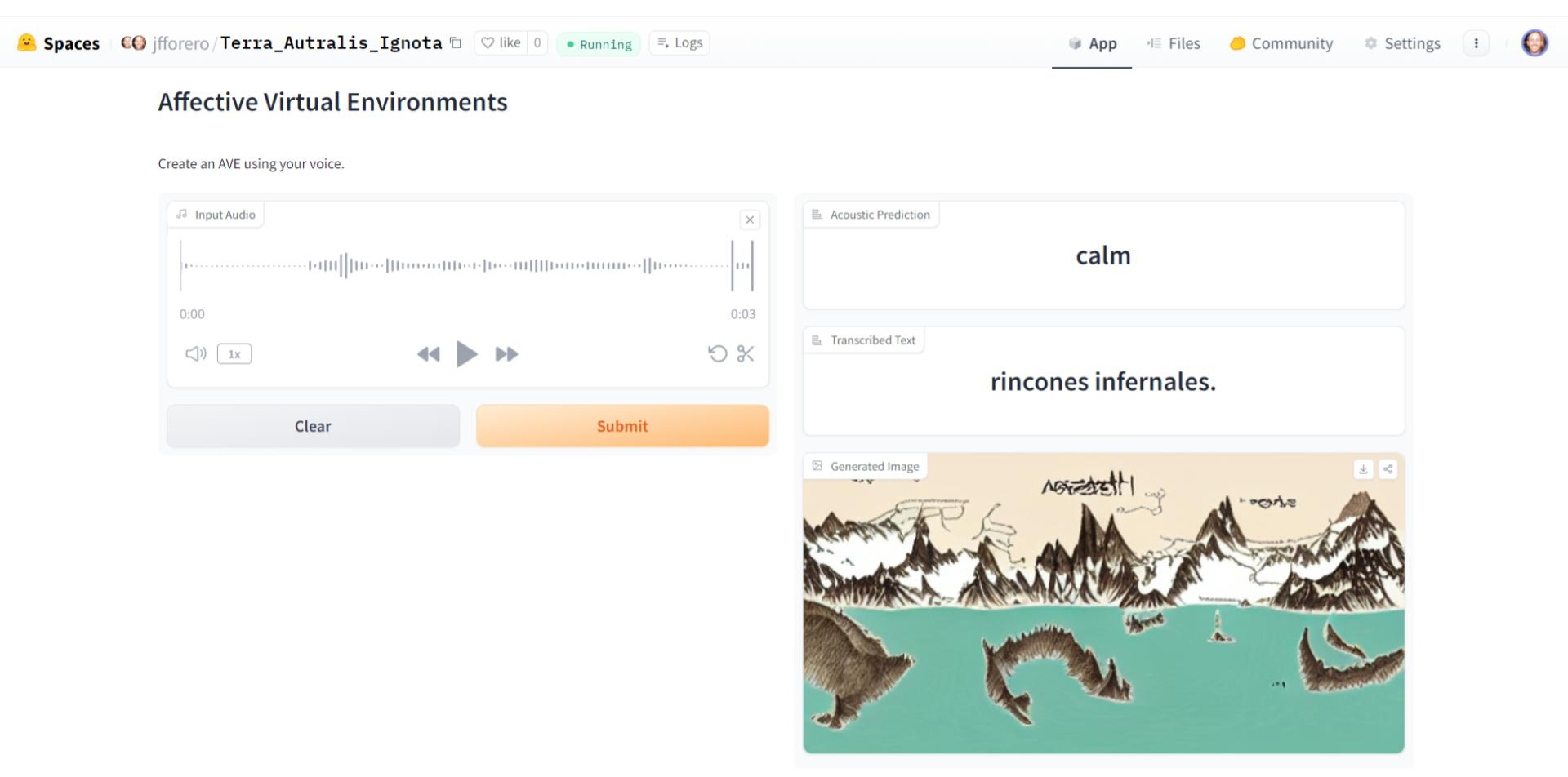
The term refers to cartographic references used during the 15th to 18th centuries, which alluded to territories about which little was known (by European sailors), such as Patagonia, or Antarctica, among other places. These territories were commonly attributed with fantastical and monstrous characteristics. The nature of South America was depicted as exotic, wild, other, and, in this sense, monstrous.


After Columbus arrived in America and the subsequent creation of the House of Trade in 1503, there was a boom in the recording and documentation of the ‘new’ territories. The royal registry was a secret map that continuously updated the cartography of what was known by Spain (and by Europe in general) up until then.


Since the maps were primarily based on the accounts of the explorers, the charts contained undefined or incomplete spaces. Additionally, it was common to find graphic references to the local flora and fauna on the maps, as well as written annotations on the documents.

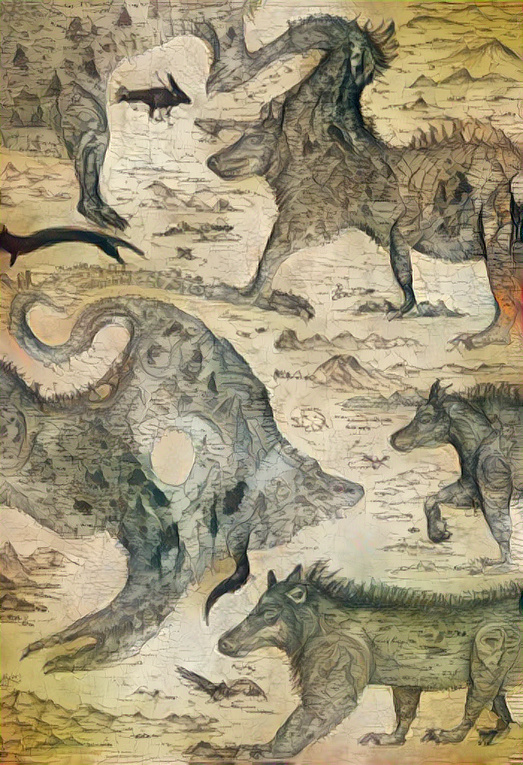
The unknown was often associated with the monstrous and populated with mythological figures, such as giants, mermaids, and other hybrid species like men with animal faces and other creatures.

What did we do?
We sought to foster a dialogue between the natural environment and the species that inhabit it by using synthetically generated landscapes and processed real images to enhance the idea of the cartographic narrative.
For the natural environments, we used a set of 360-degree images obtained from Google Street View, featuring locations from the extreme south of South America, such as Navarino Island and the Beagle Channel in Tierra del Fuego, Patagonia.

We approached the research from an Anemoia’s feeling, creating a platform that allowed the generation of images edited with artificial intelligence based on oral descriptions via a microphone. The concept of Anemoia refers to a sense of nostalgia for something we have never consciously experienced or known (see more here).

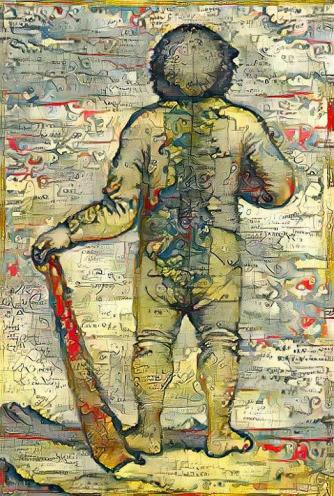
In the same way, the illustrations representing Patagonian natives were transformed using the style of the map produced by Ortelius.




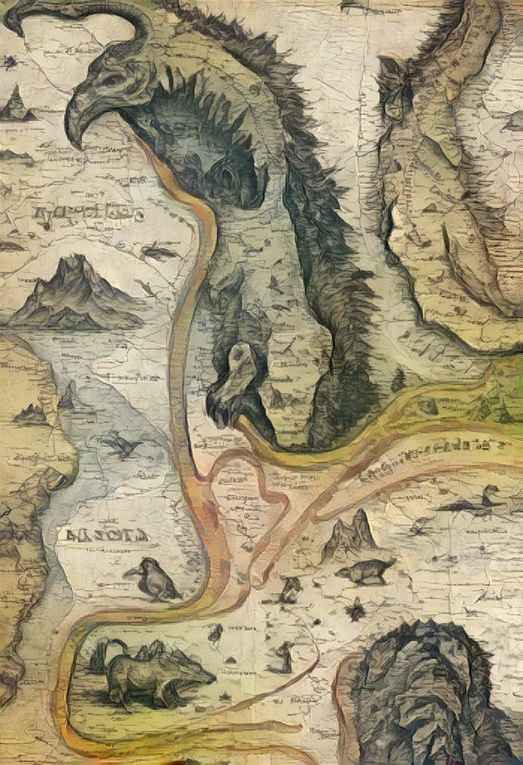
New maps were produced using our ML model that generates images through their oral description (You can try the model by clicking here).

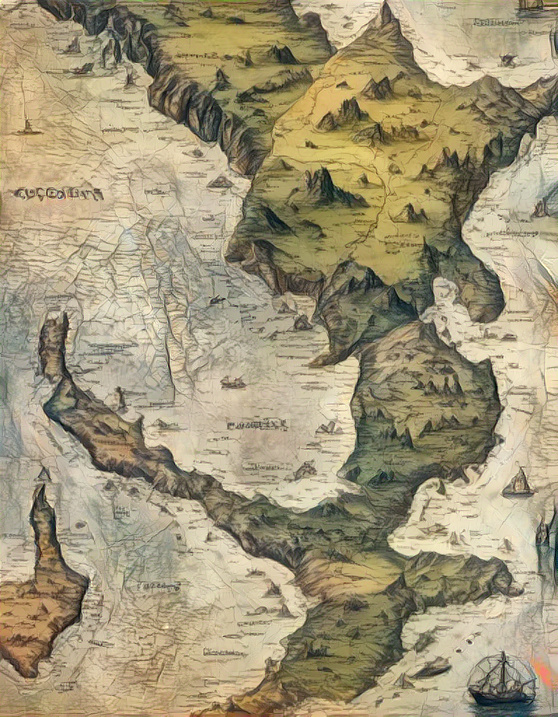
The natural landscapes were generated using shaders and exported to ultimately build an immersive environment.

 Emotional Machines